
fm8DX
Author(s): Ruby Dunn
Published: 1990
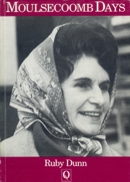
The subject of Moulsecoomb Days is the establishment of a Brighton Council Estate. The book traces the creation of a community in a 'garden suburb' which didn't have a school or a church when it was originally conceived. In the social aftermath of the Great War, Lloyd George's government devised the first serious public house-building programme. Built in a beautiful downland valley, this was an early realisation of the Liberal policy of providing 'homes fit for heroes'. However, whilst it represented a great improvement for the residents, neither the vision nor the reality was as picturesque as this catchphrase suggested. Today, the estate is considered to be rather run-down and neglected - forgotten in the mists of time, as empty promises often are.
Author(s): Various
Published: 1991
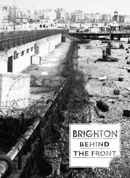
First published in 1990, Brighton behind the Front was originally produced in collaboration with the now defunct Lewis Cohen Urban Studies Centre, in the same series as Backyard Brighton and Back Street Brighton. It brings together a collection of Brighton wartime reminiscences and documents how ordinary people were affected by the war. This was a challenging time in British history, giving rise to moving accounts of individual lives set against a society undergoing profound changes. Using personal recollections, contemporary photographs, letters, a logbook and diaries, Brighton behind the Front vividly portrays what it was like to live in this south coast town during the Second World War.
Author(s): Lillie Morgan
Published: 1991
This is the moving story of Lillie Morgan's life as a pawnbroker during World War One, in which she paints a vivid picture of the abject poverty that could be found in Brighton at that time. Food was scarce and people often had to go to desperate lengths to find the price of a loaf of bread - simply to feed their family! Within this life history, there are many amusing anecdotes that attest to the resilience of the human spirit. Lillie told her story to her granddaughter, Jane Russell, who transcribed it, using her grandmother's own words - as much as possible.
Author(s): QueenSpark women writers
Published: 1991

Writers' Reign is an anthology of creative writing that is the product of three Queenspark women's writing groups that were set up in Brighton and Hove. It is the result of an interactive process that can be seen as ongoing rather than complete and contains a multitude of thoughts and ideas that are expressed in many ways; ranging from the amazing to the farcical, from the cynical to the most tender interpretations of perceptions and emotions. It reflects, in the shape of poetry and prose, the way the writers see their worldviews and through their experiences, it provides a window into their imaginative worlds.
Author(s): Various
Published: 1991
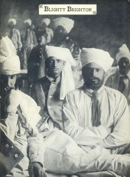
Sadly out of print, this book (produced in collaboration with the Lewis Cohen Urban Studies Centre), is all about memories of Brighton during the First World War. Through an examination of ephemera such as posters, photographs, pictures, songs and personal recollections, it portrays a collective memory of the city. Photographs are central to this work; for example Brighton Museum, Preston Manor and Brighton Reference Library are all featured pictorially. This book provides a valuable and important source of local history - a must for all those passionate about the city and its historical roots!
Author(s): Bert Hollick
Published: 1991
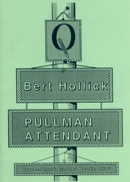
In 1935, fifteen year old Bert Hollick signed on at Brighton Station for his first shift on a Pullman Train. Working on the midnight shift from Victoria to Brighton, he learnt to ladle soup from a tureen at seventy-five miles per hour and serve a three-course lunch in a speedy fifty-eight minutes. A man of few words, Bert's life story is told in a succinct and concise style that nonetheless manages to convey wonderfully the atmosphere of the Pullman Cars, as well as providing interesting factual details of railway life. He worked at a time when a twelve to fourteen hour day was commonplace, and wages were a meagre two pounds a week, despite providing a luxury service to everyday travellers. This book is a must for all train and railway enthusiasts.
Author(s): Margaret Ward
Published: 1993
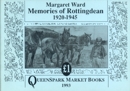
This book is a sequel to One Camp Chair in the Living Room, written by Margaret Ward and published by QueenSpark in 1988. Margaret was born and brought up in Rottingdean and lived there all her life. Unfortunately in 1989 she suffered a major stroke and at the suggestion of her rehabilitation nurses, started (as therapy) to write again. As she began to describe the stroke itself and her hard, painful struggle towards recovery she discovered fresh memories of her childhood, teenage years and early married life - they came crowding in and these more recent recollections are incorporated in this narrative.
Author(s): QueenSpark Stroke Writing Group
Published: 1993
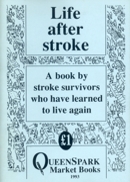
This is an account of stroke survivors' triumphs over adversity, as they undertake the difficult and painful process of learning how to live again. The book examines the lasting effects of degenerative trauma and documents the transition from being able-bodied to becoming disabled. Writing is viewed as part of the process of rehabilitation, as the survivors share their experiences in a mutually beneficial and supportive way. Through descriptions of their day-to-day lives, they demonstrate resilience and offer other stroke survivors an insight that cannot be gained from professionals, however skilled and caring, proving that there is indeed a life after suffering a stroke.
Author(s): Georgina Castelfranc, Karen Clark, Guy Pearman, Irene Player, Joan Roberts
Published: 1993
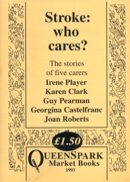
Continuing the theme of working with people who have suffered strokes, this book is intended as both a self-help aid and as a helpful guide that can provide support to others in similar situations. It is written by five people with experience of caring for a close relative who has suffered a stroke. The process of compiling their memories and thoughts and putting pen to paper was therapeutic for the authors. Their objective was to reach out and help others who may be struggling to cope in similar circumstances. Carers often have to deal with exasperating, challenging behaviour and a personal sense of being trapped and isolated. All of the narratives are lively, moving, evocative and informative and are taken from the layman's point of view, as the authors consider that professionals cannot speak with such insight. Issues that are covered include practical concerns such as claiming state benefits, hospital procedures, respite and palliative care.
Author(s): Arthur Thickett
Published: 1993
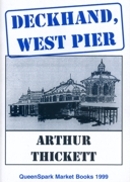
This is a fresh and often humorous look at a young man who came to Brighton in the summer of 1970, full of hope and optimism – his goal was to find adventure and ultimately love. Written in a witty prose style, we learn that on his first day he found digs, on his second day, he walked into a job, but cupid's arrow was to prove more elusive! Haunted by memories of the Second World War, Arthur Thickett tried to reconcile himself to his past and find friendship and laughter. He describes a town that behind the bright and lively holiday facade was full of lonely people. Note that the cover shown is from the second edition produced in 1999. The original book looked more like Margaret Ward"s Memories of Rottingdean.