Year Published
Categories
QueenSpark Books Archive - Free Full Text Books
A unique searchable archive of the books published by QueenSpark Books up until 2010. Free to view and full text this collection features voices that tell the story of Brighton and Hove, across the 20th Century, in their own words. The majority of these titles are now out-of-print.
You can buy those still in-print, and newer titles, with this link.
Brighton Boy - A fifties childhood
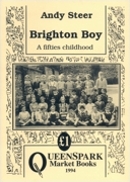
Author(s): Andy Steer
Published: 1994
This autobiography takes as its subject matter the local areas and geography of post-war Brighton, seen through the eyes of Andy Steer. It includes descriptions of institutions in the city that were important to Andy such as Stanford Road School, the now defunct Brighton Cycle Club and the Shiverers Swimming Club at the King Alfred swimming pool in Hove! The book also brings alive those boyhood times when he and his friends played in Cherry Woods, near Withdean Stadium. Here they spent timeless hours on their endless games - lost in their own joyful, imaginary world. In short, Brighton Boy is a schoolboy's tale of Brighton in the fifties which is sure to bring back memories of forgotten times for many local people.The Other Side of the Counter - The Life of a Shop Girl 1925-1945
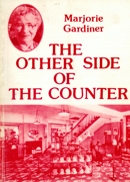
Author(s): Marjorie Gardiner
Published: 1985
This autobiography looks at the working life of milliner, Marjorie Gardiner, from 1925 to 1945, including an account of her working life during the Second World War. Marjorie's story is told in a lively and evocative manner, and describes her experiences as a shop assistant working in a Brighton hat shop, where she met all manner of elite customers. Those were the days when women were particularly fashion-conscious and there was a huge variety of different types of hat styles available. This first-hand account provides a fascinating insight into shop life during the first part of the twentieth century.Missing the Nile - Experiences of Sudanese people in Brighton
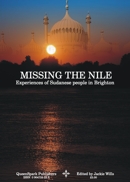
Author(s): Sudanese people in Brighton
Published: 2005
Published in January 2005, this fascinating book examines the customs and culture of the Sudanese community in the Brighton and Hove area. The British and Sudanese cultures are very different to one another and the narrative includes comparisons of the two cultures, as well as giving first-hand descriptions of festivals, celebrations including weddings and funerals, and food. The text is written in both English and Arabic, making it accessible to the widest possible audience and will be especially enjoyed by the second generation of the Sudanese community, living in the Brighton and Hove area. It also fulfils the function of recording a culture's history for future generations.At the Pawnbrokers
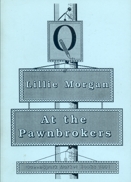
Author(s): Lillie Morgan
Published: 1991
This is the moving story of Lillie Morgan's life as a pawnbroker during World War One, in which she paints a vivid picture of the abject poverty that could be found in Brighton at that time. Food was scarce and people often had to go to desperate lengths to find the price of a loaf of bread - simply to feed their family! Within this life history, there are many amusing anecdotes that attest to the resilience of the human spirit. Lillie told her story to her granddaughter, Jane Russell, who transcribed it, using her grandmother's own words - as much as possible.Write from the Beginning - Special childhood days
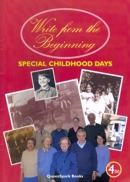
Author(s): Irene Andrew, Dorothy Fuller, Gilbert Grover, Dave Huggins, Wendy Jones, Kit Keay, Lee Lacy, Kathleen Malenczak, Saviour Pirotta, Kathleen Wilson, Michael Wilson
Published: 2002
This work is the culmination of an eight-month creative writing programme that ran at QueenSpark from August 2001 to March 2002 and included two ten-week creative writing courses and four introductory sessions on writing autobiographically. Its aim was to involve new and diverse audiences and writers in the joys of creative writing. It utilised a variety of techniques and methods to explore two central themes; one of which was writing for children and the other was looking at childhood memories. This anthology contains work from the Vallance Memories Group and the Brunswick Older People"s Project and as well as being an enjoyable read, it provides a stimulus for reminiscence work, particularly with older members of the community.Out of the Blue and blues

Author(s): Katherine J Browne
Published: 1975
This book, which consists of both poetry and prose, features the reminiscences of Katherine Browne. Katherine's story, which encompasses the entire spectrum of the human psyche, tells of the many pitfalls she encountered on her life's journey. It also shows that anybody can write, if they are sufficiently determined and given encouragement. Of particular interest in Katherine's narrative is her account of her war work as a Billeting Officer in Liverpool, in which she provides vivid descriptions of people's homes and lives during those turbulent and poverty-stricken times.Memories of Rottingdean - 1920 - 1945
Author(s): Margaret Ward
Published: 1993
This book is a sequel to One Camp Chair in the Living Room, written by Margaret Ward and published by QueenSpark in 1988. Margaret was born and brought up in Rottingdean and lived there all her life. Unfortunately in 1989 she suffered a major stroke and at the suggestion of her rehabilitation nurses, started (as therapy) to write again. As she began to describe the stroke itself and her hard, painful struggle towards recovery she discovered fresh memories of her childhood, teenage years and early married life - they came crowding in and these more recent recollections are incorporated in this narrative.Serious Intent - QueenSpark Poetry Anthology 2
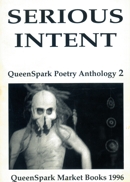
Author(s): Shirley Beckett, Danny Birchall, Birdman, Ross Clifford, Ivor Colledge, Valerie Croft, Sonia Ctvrtecka, Phyllis Damonte, Debo, Philip Eley, Sophie Embury, Beryl Fenton, Gerald Fiebig, Steve Gilligan, John Greenwood, Clive Hackney, John Head, Nyk Irvin, Simon Jenner, Roger Lindsey, Julie Martin, Glyn Morrow, Helmuth Osbourne, Nick Osmond, Sam Royce, Pauline Suett, Nick Sweet, John Tatum, Tricia Turner-Savage, Arthur Thickett, Jan Walsh
Published: 1996
Serious Intent is the second book in the QueenSpark poetry anthology. It was intended to be a sequel to Poetry, our first collection of verse, but as it developed, it became evident that there was sufficient material of great depth and scope for it to be published in its own right. It is a collection in the QueenSpark tradition of publishing new, original and varied poetry by local writers from a wide variety of backgrounds and the topics will appeal to the young and the old, the humorous and the serious. It offers an informative and accessible read for an audience that encompasses all ages and interests.Teatime Tales - The Pavilion Gardens Cafe Interviews
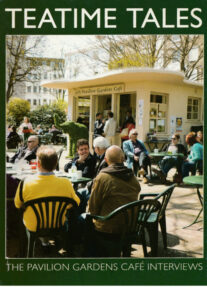
Author(s): Harry Hillery, Glenn Stevens, Robin Tulley, Libdsey Tydeman, Peter Oakes, Maxine Badger, Cara Redlich, Iain Cameron Williams, Cecelia Rose, Dorian Vaughan, Karen McMillan, Rob Cohen, Roslyn Cook, Kahn Priestly and Jessica Wallace
Published: 2011
The Pavilion Gardens Cafe, like the Royal Pavilion across the Gardens, is a unique Brighton institution. Throughout the last seventy years, it has offered refreshment, relaxation and a certain kind of charm to tens of thousands of visitors from around the world. The Café also attracts a fascinating clientele of local people, and it is some of their 'Teatime Tales' that are featured here for the very first time.From Circle to Spiral - A writers' handbook and anthology
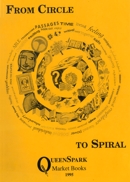
Author(s): AB, Sarah Griffiths, Lorna Jones, Kate Mackrell, Jane Malone, Maria Ragusa, Pippa Scott
Published: 1995
From Circle to Spiral is about the enjoyment of the writing process and the personal satisfaction that can be gained from it. It reveals the insights that creative writing can bring and also provides a useful, practical guide to a method of working that may be helpful to budding writers. The reader is taken on an exciting journey of self-discovery, examining themes that are grouped in terms of paired dichotomies, such as "hedonism and abstinence", "excitement and serenity", "independence and intimacy" and "shame and pride". The product of a QueenSpark writing group consisting of seven women who spent two hours per week exchanging ideas and writing together in a mutually supportive environment, it can be viewed as a testament to the positive benefits that can be gained through the medium of creative writing.