Year Published
Categories
QueenSpark Books Archive - Free Full Text Books
A unique searchable archive of the books published by QueenSpark Books up until 2010. Free to view and full text this collection features voices that tell the story of Brighton and Hove, across the 20th Century, in their own words. The majority of these titles are now out-of-print.
You can buy those still in-print, and newer titles, with this link.
A Ha’p’orth of Sweets - A child's 1930s - 1940s
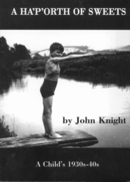
Author(s): John Knight
Published: 1998
This is a child's-eye view of carefree times spent in the 1930s and the more difficult times experienced in the 1940s, in the poverty-stricken Albion Hill area of Brighton. Meet the characters in John Knight's resilient family unit - above all, his parents, who were determined to shield their offspring from the hardships of their own youth and to help them have a life that was better than their own. Read about the escapades of a genuine born and bred Brightonian.Our Small Corner
Author(s): Sid Manville
Published: 1994(reprinted 1994)
This autobiography is the sequel to Sid Manville's Everything Seems Smaller. It recalls memories of friends, neighbours and relatives who made up the 'small corner' of Sid's neighbourhood in Bear Road in Brighton in the Twenties and Thirties. Sid writes with much affection and humour, although he doesn't forget that this era was also a time of great hardship for working class people. His own mother and father struggled to bring up a large family at a time when it was considered fortunate to have any kind of job, no matter how poorly paid. Although times have changed, lack of employment is still a feature of many people's lives in the twenty-first century.From Circle to Spiral - A writers' handbook and anthology
Author(s): AB, Sarah Griffiths, Lorna Jones, Kate Mackrell, Jane Malone, Maria Ragusa, Pippa Scott
Published: 1995
From Circle to Spiral is about the enjoyment of the writing process and the personal satisfaction that can be gained from it. It reveals the insights that creative writing can bring and also provides a useful, practical guide to a method of working that may be helpful to budding writers. The reader is taken on an exciting journey of self-discovery, examining themes that are grouped in terms of paired dichotomies, such as "hedonism and abstinence", "excitement and serenity", "independence and intimacy" and "shame and pride". The product of a QueenSpark writing group consisting of seven women who spent two hours per week exchanging ideas and writing together in a mutually supportive environment, it can be viewed as a testament to the positive benefits that can be gained through the medium of creative writing.Memories of Rottingdean - 1920 - 1945
Author(s): Margaret Ward
Published: 1993
This book is a sequel to One Camp Chair in the Living Room, written by Margaret Ward and published by QueenSpark in 1988. Margaret was born and brought up in Rottingdean and lived there all her life. Unfortunately in 1989 she suffered a major stroke and at the suggestion of her rehabilitation nurses, started (as therapy) to write again. As she began to describe the stroke itself and her hard, painful struggle towards recovery she discovered fresh memories of her childhood, teenage years and early married life - they came crowding in and these more recent recollections are incorporated in this narrative.The Church round the Corner - St. Anne’s, Kemp Town
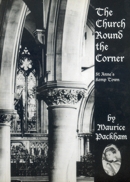
Author(s): Maurice Packham
Published: 2000
This intelligently written book examines the social and religious history of St. Anne's Church, which was located in the heart of Brighton. Maurice Packman, the author, was a choirboy at St. Anne's in the 1930s and he takes a gently humorous look at the community of his fellow worshippers. The church has been demolished, but memories of the trials and tribulations of its parishioners live on through the eyes of the author.Blighty Brighton - Photographs and memories of Brighton in the First World War
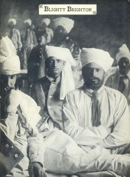
Author(s): Various
Published: 1991
Sadly out of print, this book (produced in collaboration with the Lewis Cohen Urban Studies Centre), is all about memories of Brighton during the First World War. Through an examination of ephemera such as posters, photographs, pictures, songs and personal recollections, it portrays a collective memory of the city. Photographs are central to this work; for example Brighton Museum, Preston Manor and Brighton Reference Library are all featured pictorially. This book provides a valuable and important source of local history - a must for all those passionate about the city and its historical roots!Who Stood Idly By - Poems and Cartoons
Author(s): Alf Johns
Published: 1984
Published in 1984, this is a book containing humorous and political poems and cartoons intended for an adult audience. Satirical and witty, exhibiting a wry, often black sense of humour, the subject matter centres around the politics of the government of the day, in particular the policies pursued by the Prime Minister, Margaret Thatcher and her cabinet. Written by a retired hospital porter, Alf Johns highlights the failures of Thatcher's government in the 1980s and early 1990s. Alf believed in socialism, which he described as 'the language of peace and economic success' and of particular concern to him was the topic of anti-nuclear disarmament.Alt-History - New Writing from Brighton
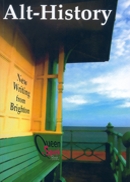
Author(s): Michael Acton, Emily Atkinson-Dalton, Ed Bell, John Bourne, Bryony Cleary, Joanne Dearden, Rachel Grant, Jane Hansford, Grace Judge, Andrew Kearsley, Barnaby O'Rorke, Neil Palmer, Rob Paraman, J T Sellers, Stephen Silverwood, Mark Wilkinson, Joe Young, Kjell Yri
Published: 2005
This diverse collection consists of fifteen stories by new writers, including five pieces of work by young authors under the age of twelve. The aim of the publication is to allow people the opportunity to write their own versions of ‘histories' of Brighton and Hove and the material includes fictional accounts of real places and events from Brighton and Hove's past, both distant and more recent. The tales include the humorous, the poignant and the surreal and provide a glimpse into an alternative world, highlighting the eccentric and heroic people from the Brighton area. It is hoped that they will be enjoyed by both a local and a wider audience.A Far Cry from a White Apron - The story of a Brighton Bevin Boy
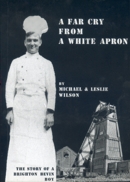
Author(s): Michael and Leslie Wilson
Published: 2000
This book is about a young boy's experiences during the Second World War. The content is frank and occasionally disturbing and harrowing, even more so because Leslie Wilson was only eighteen years' old when he made the harsh transition from working as a shop assistant to working in a Welsh coal mine. This is a fascinating biography, co-authored by the protagonist, and describes with poignancy, stories of lost youth and a harsh life spent during a turbulent historical period.Bangla Brighton - Voices from the Bangladeshi community in Brighton
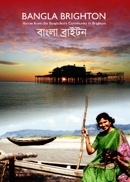
Author(s): Members of the Bengali community
Published: 2006
Poetic and passionate, lively and lyrical, Bangla Brighton is a series of moving true life accounts of life on the South coast by Brighton and Hove"s Bangladeshi community. At times heartbreaking, but always full of hope, these stories offer the reader a glimpse into a fascinating culture. As intriguing as it is informative, Bangla Brighton gives one of the lesser heard voices in our community a chance to be heard. I have visited many, many areas, many places but finally Brighton gave me a little bit of my village life. In this sense it is my village.