Year Published
Categories
QueenSpark Books Archive - Free Full Text Books
A unique searchable archive of the books published by QueenSpark Books up until 2010. Free to view and full text this collection features voices that tell the story of Brighton and Hove, across the 20th Century, in their own words. The majority of these titles are now out-of-print.
You can buy those still in-print, and newer titles, with this link.
The Children’s Millennium Diary Anthology - Our present to the Future

Author(s): Brighton school children from Balfour Infants, Balfour Junior, Bevendean Primary, Downs Junior, Downs Park, Elm Grove Primary, Fairlight Primary, Middle Street Primary, Oathall Community College, Patcham Junior, St Andrew’s CE Primary, St Luke’s Infants, St Luke’s Junior, St Martin’s CE Primary, St Mary’s RC Primary, Saltdean Primary, West Hove Infants, Whitehawk Primary, Woodingdean Primary
Published: 2001
This anthology presents a child's-eye view of the year 2000. It includes drawings and words that reflect the perspectives and views of children, aged between five and eleven. The book was compiled from one-week diaries, written over the course of the Millenium Year, by four hundred school children in the Brighton and Hove area. There is a parent and teacher guide included in the book, which will enable the diary concept to be expanded and continued in schools and at home, and which provides points for discussion and for further development. The book is written in a format much like a scrapbook, and it offers an insight into the thoughts, crazes, hobbies, habits and humour of the contemporary young mind.Bad Dog Wally
Author(s): Lynn Armstrong
Published: 1993
This is the story of a dog that was rescued from Battersea Dogs Home in London by a family. It is notable for its unusual style and use of language, in that it consists almost entirely of cartoons with only minimal use of the written word. Each page is based on an event in Wally"s life, and contains one sentence that is graphically illustrated in a child-like scrawl. The bright red cover adds another layer to the visual images contained within, and taken together, the book as a whole invokes a somewhat troubled response in the reader. At first glance, the cartoons appear naive and childlike, but a closer examination reveals the author's sense of black humour and satirical purpose. Apparently childlike, the book is interesting, because it can be read on several levels, and incorporates universal themes such as loss, betrayal and isolation.Snapshots - Childhood memories of Southampton Street 1942 ??" 55
Author(s): Janis Ravenett
Published: 1996
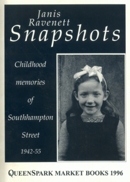
In this autobiography, Janis Ravenett recalls her memories of Southampton Street, situated in the Hanover area of Brighton, during the years between 1942 and 1955. Janis includes many vignettes of family life, recalling a childhood that was happy and full of fun, and recounts the inevitable good and bad times that she experienced, especially in the transition from childhood to adulthood. The stories reveal a child's vivid perception of the love, excitement and disappointments that are all part of the growing up process. These memories cannot fail to touch the child in all of us. They are presented as self-contained snapshots of Janis's life, woven together to form an overall picture that represents her life's experiences.Flying Sparks

Author(s): Tim Wren
Published: 1998
This autobiography depicts the trials and tribulations experienced by a hard-working apprentice electrician, as well as documenting times of laughter and fun. Tim Wren was fourteen when he left school and started work in wartime Brighton. In time, the opportunity arose to become a full apprentice and 'go out on the tools'. Tim's work took him to many different places, including the Royal Pavilion, when it was converted into an army hospital for Indian soldiers and an Italian prisoner of war camp in Billingshurst, West Sussex. However, if the truth be told, Tim seemed to spend most of his working hours with his colleagues, frequenting the teashops of Brighton!Shops Book - Shopkeepers and Street Traders in East Brighton 1900-1930
Author(s): Neil Griffiths
Published: 1978
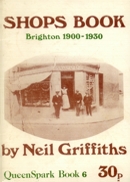
Shopping plays a major part in all our lives: we are all affected by rising prices and the changes that have taken place to shops in our local areas. This book is about shopkeepers and street traders – drawing together their various experiences in East Brighton. Shops have certainly changed greatly in the last hundred years - as large firms, supermarkets and superstores have replaced the small-scale local producers and craftsmen. The reader is better able to understand these changes through reading of first-hand experiences, in this comprehensive study of a bygone era.Always a Layman

Author(s): John Langley
Published: 1976
This is the autobiography of John Langley, an active church-goer, who was born in 1905. It tells the moving and impassioned story of his life: incorporating his childhood, his journey to adulthood, his working life and association with the Workers' Union along with his commitment and affiliation to the Labour Party. It also describes the progression of his career as a railway carriage painter and is very readable, telling us about the good and bad times of Brighton family life. His reminiscences are as sharp and accurate as if they all took place yesterday, let alone one hundred years' ago. John started from humble beginnings, in an era when a job for life really did mean just that.Catching Stories - Voices from the Brighton Fishing Community
Author(s): Fishermen
Published: 1996
This comprehensive account of the fishing industry documents how it has changed since the beginning of the century. At that time, fishing boats landed on the beach and the fish market was actually on the seafront. On a more personal level, Catching Stories is a living record, told in their own words, of the individuals who made up Brighton's fishing community. Their past is remembered with humour and honesty, as are the bygone traditions and lifestyles of their families. This unique and valuable document of social and oral history reveals the details of a traditional profession in an informative and enjoyable way. Listen to "hidden voices" that clamour to be heard!Memories of Rottingdean - 1920 - 1945
Author(s): Margaret Ward
Published: 1993
This book is a sequel to One Camp Chair in the Living Room, written by Margaret Ward and published by QueenSpark in 1988. Margaret was born and brought up in Rottingdean and lived there all her life. Unfortunately in 1989 she suffered a major stroke and at the suggestion of her rehabilitation nurses, started (as therapy) to write again. As she began to describe the stroke itself and her hard, painful struggle towards recovery she discovered fresh memories of her childhood, teenage years and early married life - they came crowding in and these more recent recollections are incorporated in this narrative.One Camp Chair in the Living Room - A Woman’s Life in Rottingdean
Author(s): Margaret Ward
Published: 1988
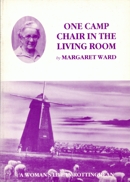
Born in 1916, Margaret Ward describes her life as a 'winding lane' because of the many twists and turns it has taken. Her autobiography describes her childhood in Rottingdean, growing up amongst a loving family in the picturesque Sussex seaside village. For Margaret, 'nowhere in the world is there such a lovely place' to grow up. Her story moves from childhood, through adolescence and working life to her eventual retirement. She recounts the inevitable good and bad times that she experienced, in her story of family life in a close-knit community of a trusting bygone age, when villagers knew and trusted their neighbours, and could leave their doors open or let their children roam freely outdoors.The Church round the Corner - St. Anne’s, Kemp Town
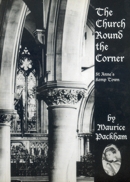
Author(s): Maurice Packham
Published: 2000
This intelligently written book examines the social and religious history of St. Anne's Church, which was located in the heart of Brighton. Maurice Packman, the author, was a choirboy at St. Anne's in the 1930s and he takes a gently humorous look at the community of his fellow worshippers. The church has been demolished, but memories of the trials and tribulations of its parishioners live on through the eyes of the author.