Year Published
Categories
QueenSpark Books Archive - Free Full Text Books
A unique searchable archive of the books published by QueenSpark Books up until 2010. Free to view and full text this collection features voices that tell the story of Brighton and Hove, across the 20th Century, in their own words. The majority of these titles are now out-of-print.
You can buy those still in-print, and newer titles, with this link.
A Far Cry from a White Apron - The story of a Brighton Bevin Boy
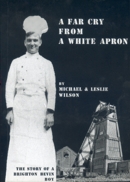
Author(s): Michael and Leslie Wilson
Published: 2000
This book is about a young boy's experiences during the Second World War. The content is frank and occasionally disturbing and harrowing, even more so because Leslie Wilson was only eighteen years' old when he made the harsh transition from working as a shop assistant to working in a Welsh coal mine. This is a fascinating biography, co-authored by the protagonist, and describes with poignancy, stories of lost youth and a harsh life spent during a turbulent historical period.Moulsecoomb Days - Learning and Teaching on a Brighton Council Estate 1922-1947
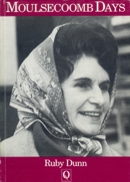
Author(s): Ruby Dunn
Published: 1990
The subject of Moulsecoomb Days is the establishment of a Brighton Council Estate. The book traces the creation of a community in a 'garden suburb' which didn't have a school or a church when it was originally conceived. In the social aftermath of the Great War, Lloyd George's government devised the first serious public house-building programme. Built in a beautiful downland valley, this was an early realisation of the Liberal policy of providing 'homes fit for heroes'. However, whilst it represented a great improvement for the residents, neither the vision nor the reality was as picturesque as this catchphrase suggested. Today, the estate is considered to be rather run-down and neglected - forgotten in the mists of time, as empty promises often are.Pullman Attendant
Author(s): Bert Hollick
Published: 1991
In 1935, fifteen year old Bert Hollick signed on at Brighton Station for his first shift on a Pullman Train. Working on the midnight shift from Victoria to Brighton, he learnt to ladle soup from a tureen at seventy-five miles per hour and serve a three-course lunch in a speedy fifty-eight minutes. A man of few words, Bert's life story is told in a succinct and concise style that nonetheless manages to convey wonderfully the atmosphere of the Pullman Cars, as well as providing interesting factual details of railway life. He worked at a time when a twelve to fourteen hour day was commonplace, and wages were a meagre two pounds a week, despite providing a luxury service to everyday travellers. This book is a must for all train and railway enthusiasts.A Pen for all Seasons
Author(s): Ethel Akhurst, Marjory Batchelor, Sylvia Calvert, Stevie English, Valerie Goble, Dave Higgins, Susie Mehmed, Bob Miles
Published: 1997
Published in 1997, this interesting and diverse anthology is the outcome of work that was produced by members of the Hove Writers Club. It will appeal to people of all ages and backgrounds, who should enjoy this inspiring work, which reflects the creativity and freedom of expression that has emerged from the pens of its authors. Including poetry and prose, it focuses on the details of everyday life through the medium of creative writing. The enthusiasm and energy of the writers comes across vividly, and this should appeal to readers of all levels; from the academic to the pleasure seeker, as well as to audiences who are new to poetry.The Sudden Change in My Life

Author(s): Gary Irwin
Published: 1995
This is a powerfully honest account of one man's triumph against the odds. Gary Irwin survived major surgery to remove a brain tumour. In this book, he takes the reader on a journey that charts the progress of his illness, including the invasive and traumatic surgery that he underwent. He documents the long process of initial diagnosis, treatment and eventual recuperation. This first-hand account is narrated from the patient's subjective point of view as opposed to a medical perspective and is a fascinating and compelling read.Snapshots - Childhood memories of Southampton Street 1942 ??" 55
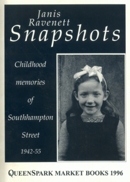
Author(s): Janis Ravenett
Published: 1996
In this autobiography, Janis Ravenett recalls her memories of Southampton Street, situated in the Hanover area of Brighton, during the years between 1942 and 1955. Janis includes many vignettes of family life, recalling a childhood that was happy and full of fun, and recounts the inevitable good and bad times that she experienced, especially in the transition from childhood to adulthood. The stories reveal a child's vivid perception of the love, excitement and disappointments that are all part of the growing up process. These memories cannot fail to touch the child in all of us. They are presented as self-contained snapshots of Janis's life, woven together to form an overall picture that represents her life's experiences.Pullman Craftsmen - Life in the Pullman Car Company's Preston Park Works Brighton 1947-1963 - A View from the Shop Floor
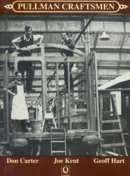
Author(s): Don Carter, Joe Kent, Geoff Hart
Published: 1992
This work records the reminiscences of three craftsmen who were employed in the Preston Park Works of the Pullman Car Company during the fifties and sixties. As well as giving the reader a flavour of life in the engineering industry in those times, it also provides a fascinating post-war history of the automobile. The authors record the rise and fall of the company, from its heyday in 1948 to its decline and ultimate bankruptcy in 1963. In its day, it was a successful and valued company in the Brighton area, and it supported the local economy to a great extent. This knowledgeable account provides a testimony to a craftsmanship of a bygone era!The Smiling Bakers
Author(s): George Grout
Published: 1992
George Grout was a member of one of Brighton's best-known family bakers. He learnt the skills and craft of baking from his father and brothers at a young age, and can attest to hard times as well as recalling many happy memories of laughter and fun. George recalls the years when he lived and worked at the bottom of Coombe Road, and his bedroom was full of paper bags, there were horses in the stable and he had to get up very early in order to get to work on time. He reminisces about his ten brothers and sisters, his strong and gentle mother and the man who was his teacher, his boss and above all his father. In a nutshell he loved his work, stating that "being one of "The Smiling Bakers" kept me going. That was the name that we called ourselves.Flying Sparks
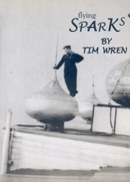
Author(s): Tim Wren
Published: 1998
This autobiography depicts the trials and tribulations experienced by a hard-working apprentice electrician, as well as documenting times of laughter and fun. Tim Wren was fourteen when he left school and started work in wartime Brighton. In time, the opportunity arose to become a full apprentice and 'go out on the tools'. Tim's work took him to many different places, including the Royal Pavilion, when it was converted into an army hospital for Indian soldiers and an Italian prisoner of war camp in Billingshurst, West Sussex. However, if the truth be told, Tim seemed to spend most of his working hours with his colleagues, frequenting the teashops of Brighton!Daring Hearts - Lesbian and Gay Lives of 50's and 60's Brighton

Author(s): Peter Dennis, Beccie Mannall, Linda Pointings
Published: 1992
This is a collection of life stories of people who are members of the gay and lesbian community in the Brighton area. The book is based on taped interviews with forty lesbian and gay men who spoke openly about their lives in and around Brighton. In the fifties and sixties the town enjoyed a national reputation as a haven for gay people and it was viewed as a relatively tolerant place for people to visit and live. Lesbians and gay men came from all over Britain for holidays and to settle down. Brighton was considered a type of ‘Eldorado', a promised land, and this tradition remains today, where its thriving gay community is one of the largest in the country, outside London.