
fm8DX
Author(s): Albert Paul
Published: 1981
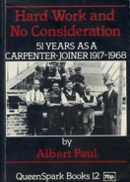
This is the sequel to Poverty, Hardship but Happiness. Brightonian, Albert Paul, left school at the tender age of fourteen and began work as a carpenter, rising from the position of apprentice to that of master craftsman. Albert remained in his job throughout his life, in an era when people usually continued to work for one employer throughout their working lives. This second book vividly describes how he supported his family during his working life as a carpenter/joiner in Brighton from 1917 to 1968. His hard work and commitment throughout his career, which lasted fifty-one years, is an example to us all. This book was written in 1975, one year before the author died.
Author(s): James Nye
Published: 1981
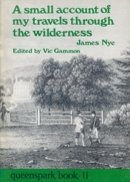
This book contains original material that was written during the period between the early 1860s and 1888. It is part autobiography and part diary, and tells the story of James Nye, an extraordinary man, who lived much of his life in a nineteenth century rural village, near Lewes. His life story was discovered in latter days by a fellow-musician, Vic Gammon, who brought his words to print in 1981 and wrote the introduction to this book. The narrative describes James's diverse career, ranging from his work as a village musician, composer, instrument maker, agricultural labourer and quarry worker to his later work as a gardener in Ashcombe House, near Lewes. He was a deeply religious man, being a self-educated Calvinist and his writings reflect his spiritual journey and belief in social justice for the poor and dispossessed. Nye's poetry, which is included in the book, provides a vivid testament to a world very different to that of today, and is especially vivid in his descriptions of life in the Sussex locality.
Author(s): QueenSpark Rates Book Group
Published: 1983
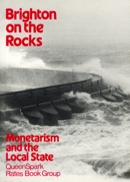
Published in 1983, this book was intended to be the first of a new series, but is the only one that was eventually commissioned. It incorporates a collection of interviews, photographs and statistics, which are used to analyse how monetarism affected the economic policies that were pursued by the city's local authorities in the 1980s. When local councils imposed financial cuts from 1980 onwards, they argued that the cuts were necessary because of overspending. This text takes the view that monetarist policies are implicated in the decline in public services and critically evaluates the effects of monetarism on working people's lives, organisations and throughout the welfare state. It poses the question as to whether a different kind of economics was needed that was geared to need rather than to monetarist philosophy?
Author(s): QueenSpark writers
Published: 2003

This is a reprint of the revised second edition published in 2003. It is included here (out of sequence in the QueenSpark chronology) because it was created to be a limited edition of the 1984 book that enabled a new generation of readers to become acquainted with Harry Cowley, a Brighton chimney sweep who became a legend. When he died in 1971, his body was laid in state at St Peter"s Church. More than 500 people attended his funeral to pay tribute to the man they called "the Gov"nor". Since then, Harry has not been forgotten. In 1999 Brighton and Hove Bus Company acknowledged his contribution to the City by giving a bus his name and in 2003 The Cowley Club, named in tribute to Harry and his grassroots action, opened its doors to the public.
Author(s): Alf Johns
Published: 1984
Published in 1984, this is a book containing humorous and political poems and cartoons intended for an adult audience. Satirical and witty, exhibiting a wry, often black sense of humour, the subject matter centres around the politics of the government of the day, in particular the policies pursued by the Prime Minister, Margaret Thatcher and her cabinet. Written by a retired hospital porter, Alf Johns highlights the failures of Thatcher's government in the 1980s and early 1990s. Alf believed in socialism, which he described as 'the language of peace and economic success' and of particular concern to him was the topic of anti-nuclear disarmament.
Author(s): QueenSpark women writers
Published: 1984

This anthology contains poetry and prose from a QueenSpark Women's group. This was a group of women aged between 20 and 64 years, who met regularly to write and partake in group discussions and workshops. There is a strong feminist influence to the issues that are covered, encompassing the empowerment of women, particularly in today's world, when women have to balance multiple tasks in their daily lives. Paper on the Wind is relevant to all people regardless of age, disability, gender, religion and sexual orientation. It offers a forum for people to explore and experiment with their own creative writing processes and to take the necessary steps that will enable people to start writing for themselves, as well as providing encouragement to all those budding writers out there!
Author(s): Doris Hall
Published: 1985
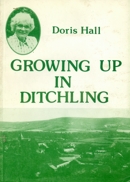
This is a beautifully illustrated account of life as a adolescent girl, growing up in a Sussex rural village between the First and Second World Wars. Doris Hall describes the details and events of her daily life in an environment where she was able to develop peacefully and happily, surrounded by family, friends and local traders. Such an idyllic childhood tells of a time gone by which was more trusting and safe than today's world – it was a time when one could leave one's door open or let one's children play safely in the street. A far cry from modern-day Ditchling? Maybe, although many of the pubs and shops described by Doris still exist, even if the people that ran them are long gone.
Author(s): Marjorie Gardiner
Published: 1985

This autobiography looks at the working life of milliner, Marjorie Gardiner, from 1925 to 1945, including an account of her working life during the Second World War. Marjorie's story is told in a lively and evocative manner, and describes her experiences as a shop assistant working in a Brighton hat shop, where she met all manner of elite customers. Those were the days when women were particularly fashion-conscious and there was a huge variety of different types of hat styles available. This first-hand account provides a fascinating insight into shop life during the first part of the twentieth century.
Author(s): Olive Masterson
Published: 1986
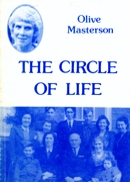
This is Olive Masterson's tale of growing up in the Richmond Road area of Brighton between the Wars. Surrounded by her close-knit family and friends, she was the youngest child of four, and lived a varied and interesting life. In her narrative, she voices the hopes and fears that she experienced in making the often difficult transition from childhood to adulthood. Olive had many occupations; from working in a uniform factory to being a machinist in a gown shop near Preston Circus. She recounts the trials and tribulations of an ordinary hardworking Brightonian woman, who dealt stoically with the many problems she faced in her life, including diphtheria in the family and the ill-health of her father, who was the principal wage-earner.
Author(s): Albert Paul
Published: 1974

This book is the first that was published by QueenSpark. It tells the story of a working class boy's life in the years between 1903 and 1917, from his childhood through to adolescence. It looks at the hardships of life before and during the First World War and examines the ways that children's lives changed as a result of the Great War. Albert Paul was a retired carpenter who lived all his life in Brighton, and he describes in vivid detail the life of a boy brought up in poverty and his struggle against adversity.
- « Previous
- 1
- …
- 7
- 8
- 9